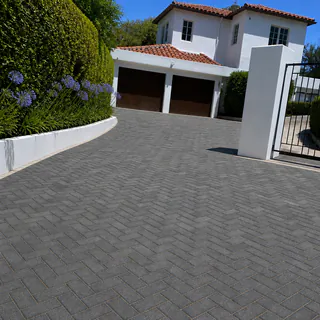
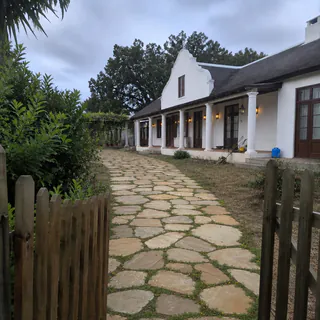
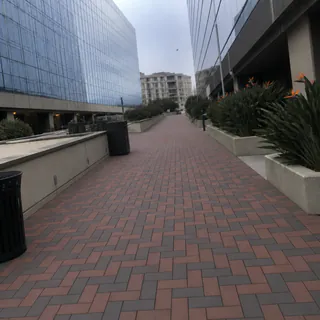
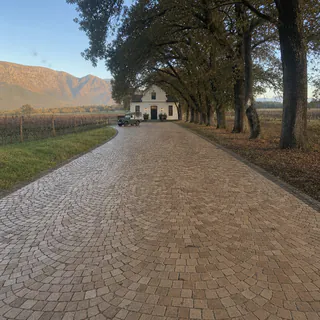
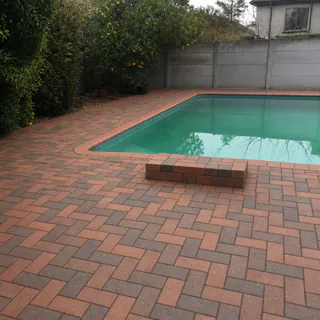
Commercial paving is not a driveway made bigger. It carries heavier vehicles more often, so the paver, the base and the edges are specified for that traffic. We quote commercial paving across Cape Town, from warehouses and office parks to retail centres and schools.
For industrial use the Concrete Manufacturers Association (CMA) recommends 80mm pavers in a herringbone bond. We survey the site for free and follow with a written quote built up line by line, and after-hours and weekend work is something we can programme where the site has to keep trading.
The short version
- 80mm for industrial use. The CMA recommends an 80mm paver for industrial use, and says very little is gained from blocks thicker than that.
- Interlock, not just strength. CMA Book 3: structural performance depends on the interlock between blocks and is virtually independent of block strength above a certain minimum.
- Herringbone for heavy traffic. The CMA says it gives the best resistance to horizontal and vertical deformation.
- No rate card. You get a written quote after we have surveyed the site.
Signs Your Commercial Paving Needs Attention
Ruts, broken blocks, steps and standing water show on the surface, but the cause is often in the layers underneath. That is what we look at on site.
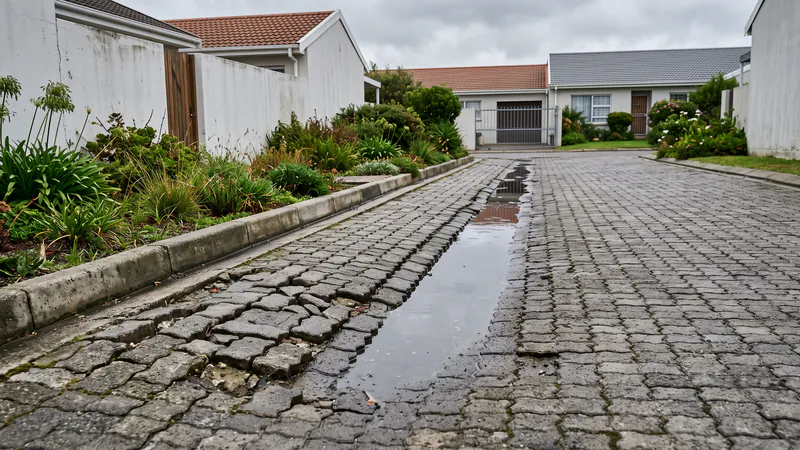
Rutting in delivery lanes
Wheel-track depressions point below the surface. CMA Book 2 names an inadequate subbase or subgrade, subsoil water, overloading and too-thick bedding sand as causes of settlement.
Broken pavers at pressure points
Cracked blocks around bin areas, loading bays and skip pads. Where defects are local, the CMA says repairs "are not usually difficult, time consuming or costly", which can mean lifting and relaying just the affected area.
Trip hazards at thresholds
Settled blocks at doorways and fire exits are a trip risk for everyone on site. Book 3's limit for the level difference between adjacent pavers is 3mm, for its Degree of Accuracy I, three months after opening to traffic.
Water standing after rain
Ponding means water is not running off as designed. The CMA says a minimum fall of 2% in any direction is generally required; our guide covers the layer faults that undermine block paving.
Load Class Decides Everything
Let the traffic decide the thickness, block shape, bond, strength class and edges, and get each one named on the quote.
Thickness
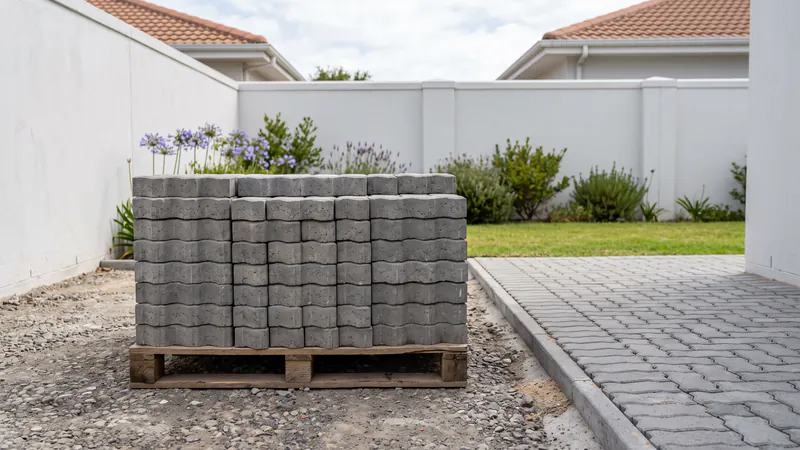
CMA Book 2 calls 50–60mm blocks adequate for domestic use, recommends 80mm for industrial use and says "very little benefit is gained from pavers which are thicker than 80 mm".
Block shape
Type S-A blocks interlock on all side faces and are "generally recommended for all industrial and heavy-duty applications".
Bond
Herringbone "ensures the best resistance to both horizontal and vertical deformation", and Book 2 recommends it for industrial pavements.
Strength class
Book 3 defaults to the lower class unless wheel loads exceed 30 kN or the specification schedules the higher one, and its commentary adds exceptional loads and severe conditions. Those are the old compressive classes (25 and 35 MPa); current SANS 1058 classes are 30/2.0 and 40/2.6.
Edges
Book 2 says a high-traffic industrial area may need heavy-duty concrete kerbs or a reinforced concrete ground beam.
Ask your engineer which class to name; our guide for body corporates lists what a commercial paving specification should name.
Standards And Handover Checks
SANS 1058 covers the block, not the laying, so the handover checks belong in the contract too.
- The block: ask for SANS 1058 compliance, which sets the block's tensile splitting strength, abrasion resistance and water absorption. The base, bedding, edges and joints need their own specification.
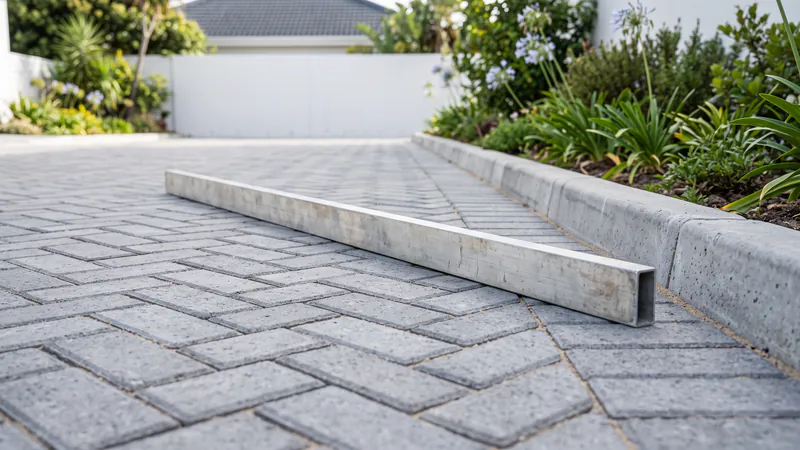
- Adjacent pavers: a level difference of no more than 3mm.
- Under a 3m straight edge: within +10mm/−15mm, tightening to +3mm/−0mm at kerbs, channels, gullies, manholes and other edge restraints, a figure Book 3's commentary calls very difficult to achieve and not critical provided adequate falls are met.
- Pattern lines: no more than 10mm off any 3m straight line and 20mm off any 20m line.
- Joints: jointing sand to the CMA's grading, finer than the bedding sand.
Book 3's surface limits are for its Degree of Accuracy I, measured three months after opening to traffic, and its commentary allows them to be relaxed for economy. Keep the signed handover results, and walk the site again once it has been in use for three months; our 12-point inspection for finished paving covers the rest.
Commercial Pavers We Use
How A Commercial Project Runs
Five stages, and on an occupied site the work can be phased so one section closes while another stays open.
Site survey & specification
We survey the site, look at the traffic it carries and follow up with a written quote, priced to your engineer's design, bill of quantities or architect's specification where there is one, or on a design-and-build basis, with the pavement designed by an engineer, where there isn't.
Programme & phasing
A phased plan with zoned sections so the site can keep running. After-hours and weekend work is something we can programme for retail and any site that cannot close.
Excavation & sub-base
Excavation to the design depth, a capping layer where the design calls for one, then the base layers compacted as specified.
Kerbs, drainage & laying
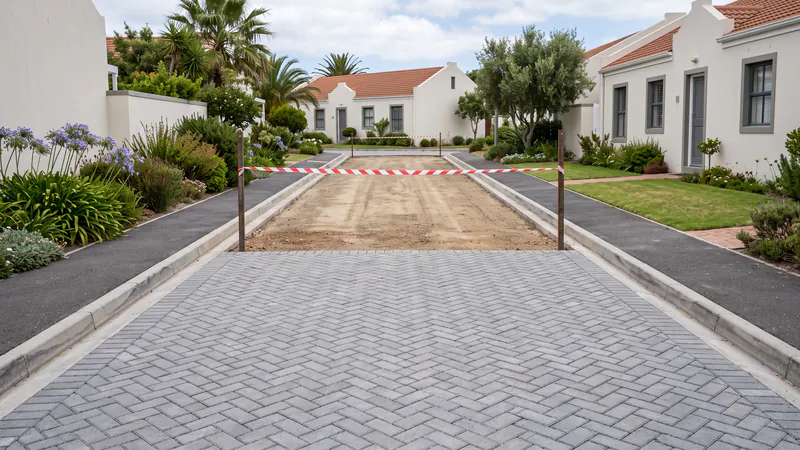
Edge restraints go in first, concrete kerbs or an existing concrete or asphalt edge where the design allows, with drainage channels where designed, then the pavers are laid in the specified bond (herringbone, for industrial pavements) on bedding sand screeded loose to 25mm after compaction.
Final compaction & handover
Compaction, jointing sand and line marking where specified. Book 3 requires at least five passes of a heavy pneumatic-tyred roller after joint filling on paving that regularly carries wheel loads over 30 kN.
Need a commercial paving quote?
Free site survey and a written quote against your load class, programme and trading hours. No obligation.
What Commercial Paving Costs
We don't publish a rate. Commercial work is priced off the specification, because the build-up underneath is where the money goes.
Traffic and paver
The loads set the block thickness, type and strength class.
Excavation and base
How deep the design goes and how much base it needs.
Kerbs and drainage
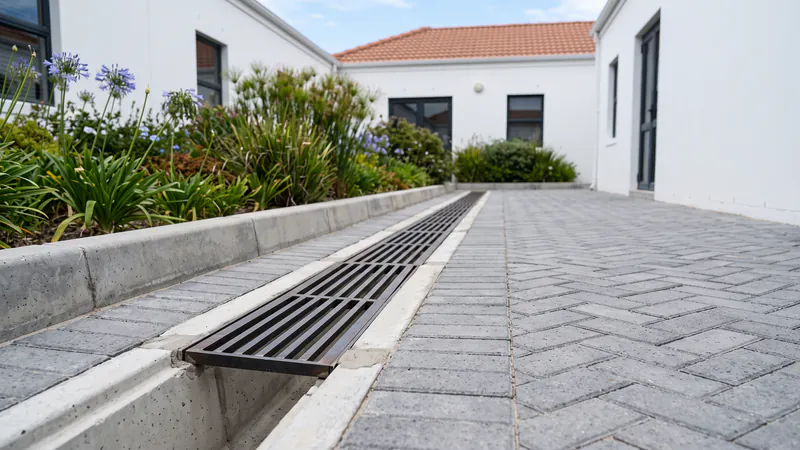
The length of kerbing, the channels and tie-ins to the existing stormwater system.
Break-out
How much old surface comes up and is carted away.
Phasing and hours
Working zone by zone on an open site, and any after-hours or weekend work we programme.
The surface
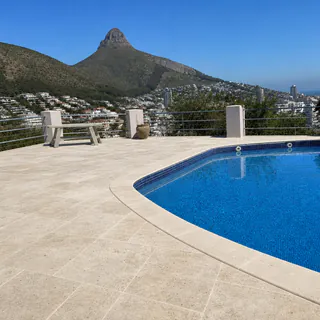
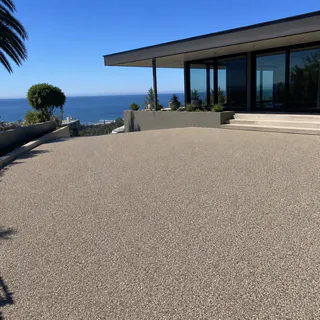
Permeable build-ups and granite slab plazas price differently from standard block paving.
Ask every bidder to price the same separate lines, so the quotes you compare cover the same work.