We measure up on site, then quote•No call-out fee, no obligation•A written, itemised price — however big the job
You came here for a rate per square metre, so here is the honest answer first: we do not publish one. Not to be cagey — because the biggest costs in a paving job are underground and invisible from a photograph. How deep we have to dig, what has to be carted away, and whether a machine can reach the work at all. A number printed on a web page cannot know any of that. What we do instead is come out, measure the real area, look at the real ground, and hand you a written price with every line on it. Free, and you are committed to nothing.
Why we won’t print a rate per square metre
A published rate only survives contact with a site if the site is average, and nobody’s driveway is. The moment a printed number meets soft ground, a slab that has to come out, or a back garden with no vehicle access, one of two things happens: the price goes up after you have committed, or the job quietly gets thinner underneath to protect the number.
The second reason is about you being able to compare quotes at all. A single rate hides the build-up, and the build-up is where paving jobs are won and lost — two quotes at the same rate can describe completely different work under the surface. Our guide to what drives paving cost in Cape Town covers the same ground in more depth.
What actually moves the price
Eight things, roughly in the order they tend to matter. The first three are usually bigger than the one everybody asks about — the paver.
How deep we dig, and how much leaves site
We take out topsoil, roots and anything soft until we reach ground worth building on. Digging deeper is more hours. And everything we take out has to be loaded and carted to a licensed disposal site, which is a truck and a tip fee that grows with the depth. This is the line that most often separates a low quote from a realistic one, because it is the part nobody can see once the job is finished.
The sub-base, and how well it is compacted
The sub-base is the compacted stone layer between the ground and the sand the pavers bed into, and it is what actually carries the load. A thicker layer means more stone bought, more loads delivered and more passes with a compactor. Thinning it is invisible on handover day and expensive two winters later, which is why it is the first thing a cut-price quote quietly reduces.
Access, and whether a machine can reach the work
A front driveway a bakkie can reverse onto is a different job from a back garden reached through a side gate. When the stone, sand and pavers come in by wheelbarrow and the spoil goes out the same way, identical square metres take far more labour hours. Nothing about the finished surface changes. The number does.
Levels, falls and where the water goes
Paving has to shed water rather than hold it, and still meet your thresholds, the garage door and the existing drains at the right height. The Concrete Manufacturers Association sets a minimum fall of 2% in any direction. Where the natural ground does not give us that, the levels have to be built — stepping them or cutting in a channel is real work, and it has to be priced.
Edge restraints
The edge restraint is the fixed edging along the sides that stops the pavers creeping outwards. The CMA is not equivocal: "All cbp must have an edge restraint." It is a concrete haunch or a laid kerb, it takes materials and time, and it is the most common thing missing from a cheap quote. A long, winding perimeter costs more to restrain than a square one of the same area.
Cutting — manholes, kerbs, curves and corners
Every cut is a paver handled twice and a piece of waste. An open rectangle barely cuts at all. A driveway with two manhole covers, a stormwater grid, a curved apron and a bed around a tree measures the same on the tape and takes far longer on the ground. When you send a photo, the shape tells us more about the price than the size does.
Taking out what is already there
Lifting an old paved surface is straightforward. Breaking out a reinforced concrete slab is not — that is a breaker, more spoil to load and a heavier tip bill. If a sound existing base can be reused, it comes off the price rather than adding to it, and that is one of the things we look for when we come out.
The paver you choose
The material is the line most people expect to dominate, and it usually does not. Plain cement cobble sits at the affordable end of what we lay, clay brick in the middle, cut natural stone such as granite at the top. Whichever you pick, the excavation, the base and the edging underneath are much the same work — which is why a cheaper paver does not make a job cheap on its own.
50mm or 60mm? The paver thickness nobody explains
Pavers come in different thicknesses, and this is the most useful thing to understand before comparing two quotes — a thicker paver costs more per square metre, so a quote that never names a thickness has left itself room to give you the thin one.
The Concrete Manufacturers Association, whose paving guidance is published free and is the reference we build to, puts it like this: “Generally for domestic use, 50 – 60 mm blocks are adequate. For industrial use an 80mm paver is recommended.” It adds that going thicker than 80mm buys you very little.
Which end of that domestic range we specify is our call, made with you on site — the CMA does not prescribe it for you. In practice we put the 60mm under anything a car drives on, and a 50mm is fine on a garden path or a courtyard that only takes feet. So ask which one your quote is for. If you want the comparison of the materials themselves, we set out charcoal cobble against clay brick and granite separately.
The cheapest part of a quote to cut is the part you cannot see
The CMA is blunt about how block paving fails: “Most failures of pavements are due to ingress of water into the pavement layerwork.” Everything that keeps water out — the fall, the compacted base, the edge restraint, the jointing — is buried or easy to overlook on handover day. That is exactly why it is the first thing to disappear from a low price, and why a quote worth trusting itemises it instead of bundling it away.
What a paving quote should have on it
Whether you end up using us or not, these are the six things worth checking on any Cape Town paving quote before you sign it.
The area, measured — not estimated
A quote written off a photograph or a Google Earth screenshot is a quote that will change. Yours should state the square metres somebody physically measured at your place.
The build-up, layer by layer
Excavation, sub-base, bedding sand, the pavers, the jointing and the edge restraint should each appear as their own line. If the whole job is one number on one line, you cannot tell what has been left out of it.
The paver named exactly
Not "cobble" but the manufacturer, the product, the colour and the thickness. It is the difference between comparing two quotes and guessing at them.
Spoil removal stated, not assumed
Ask outright whether carting the excavated material away is in the price. In Cape Town it needs a truck and a licensed disposal site, and it is the most common item to reappear as an extra later.
Who deals with the manholes and the municipal edge
If the job runs to a City stormwater grid, a water meter box or the pavement outside your boundary, the quote should say who is handling it and whether it is included.
What happens to the joints after you have paid
The CMA advises topping up the joints roughly three months after construction. Ask whether that visit is part of the price or a callout you will be invoiced for.
Two numbers that let you check the finished job
Paving is mostly judged by eye, which does not help much when the work is done and the money is due. The CMA publishes tolerances anybody can check without a tool. The step in surface level between two adjacent pavers should be no more than 3mm — you can feel that with a bare foot. And the sand the pavers bed into should be 25mm compacted, give or take 10mm; the CMA is explicit that bedding sand must never be used to fill hollows in the layer underneath, because that is what settles later.
Those tolerances are meant to be judged once the paving has settled into use, not on the afternoon it is finished. For the longer list of things to look at before you pay anybody, we wrote how to spot bad paving work.
Want a real number for your place?
We come out, measure up and put a written price in front of you. Free, and there is no call-out fee.
No call-out fee and no obligation at the end of it. We would rather see the ground, the access and the levels than guess from a photograph.
We measure up properly
The actual area, the perimeter that needs restraining, the cuts, where the water currently goes and where it needs to go instead.
We talk through pavers and base work
Materials in your own light rather than in a brochure, and a straight conversation about what goes underneath them.
You get it in writing, itemised
The paver, the square metres, the excavation, the base, the edging and the jointing, each on its own line — so you can compare it against anyone else’s quote line for line.
There is no typical price, and a figure given over the phone is a guess at the part of the job that costs the most. Two driveways of the same size on the same street can land a long way apart, because one needs a lot of soft ground taken out and carted away and the other needs almost none. What we can tell you in advance is what your quote is built from: the area we measure, the excavation and spoil removal, the sub-base, the bedding and jointing sand, the edge restraint, the cutting, and the paver you choose — each on its own line.
What is the average cost of paving per square metre in South Africa?+
A national average is the least useful number in this trade. A rate that blends a flat inland plot with a sloped Cape Town driveway describes neither of them. It is also worth knowing where most published averages come from: paver manufacturers, quoting the product. The paver is one line of a paving quote and usually not the line that decides it. We do not publish an average and we do not price off one — we measure your site and quote your site.
How much does it cost to pave a driveway in South Africa?+
It depends far more on what goes under the driveway than on the driveway itself. A driveway carries a car, so the excavation and the compacted sub-base are the real cost, and how deep they go is a site question rather than a national one. Gradient matters too, because a steep driveway may need levels built or stepped first. So does whether the old surface is paving that lifts easily or a reinforced concrete slab that has to be broken out and carted away.
How much does it cost to pave 50 square meters?+
Area is only one of the inputs, which is why the question cannot be answered honestly on its own. Picture two jobs of that size. One is a flat, open driveway a truck can reverse onto with bare ground to build off. The other is a back courtyard reached only through a side gate, with an old slab to break out, a drain and two manhole covers to cut around, and every barrow-load in and out by hand. Same tape measure, different job. We price the build-up and the access, not just the square metres.
How much labour for paving per square meter in South Africa?+
A labour-only rate tells you very little, because it says nothing about what is being built underneath. The two cheapest shortcuts in paving are thinning the sub-base and leaving out the edge restraint, and neither shows on handover day. Our quotes split by stage of work instead — excavation, base, laying, jointing, edging — so what you compare is the actual build-up rather than an hourly rate applied to an unknown amount of work.
What is the cheapest paving in South Africa?+
Of the materials we lay, plain cement cobble is the cheapest per square metre, with clay brick above it and cut natural stone such as granite at the top. But the cheapest paver does not make the cheapest job. The digging, the sub-base and the edging are much the same work whichever paver goes on top, and that groundwork is usually where a suspiciously low quote is really saving its money. The CMA puts the consequence plainly: "Most failures of pavements are due to ingress of water into the pavement layerwork."
What is cheaper, paving or concrete?+
We are not going to tell you one is always cheaper, because it depends on the site. What we will tell you is how they differ afterwards. A concrete driveway is cast in panels, so fixing a section, or reaching a pipe underneath it, means breaking out that part and re-casting it. Block paving is laid dry on sand, so individual pavers can be lifted and re-set. If you are weighing up the two, say so when we come out and we will talk you through both.
Coverage
Where We Quote
We measure up and quote across the Cape Peninsula and the northern and southern suburbs. Pick your area to see what we do locally.
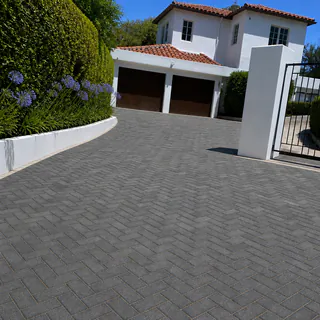
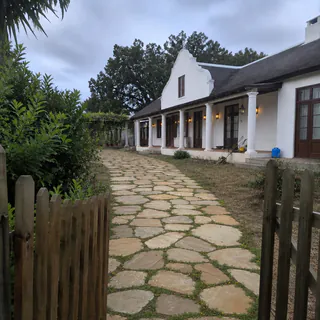
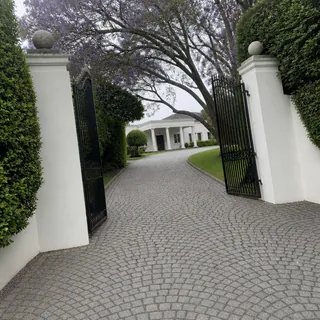
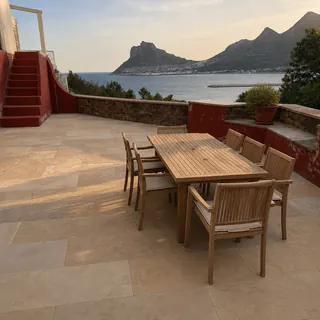
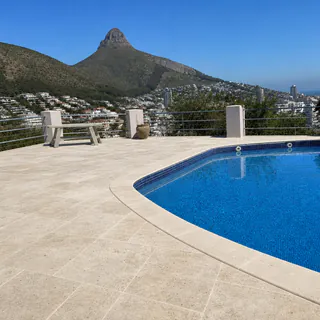
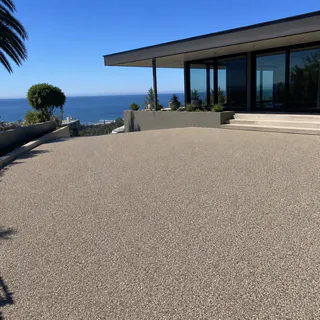
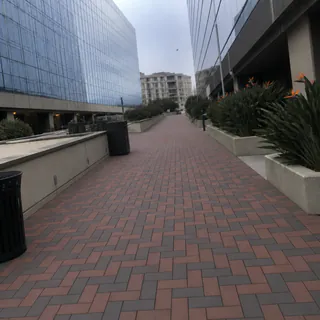
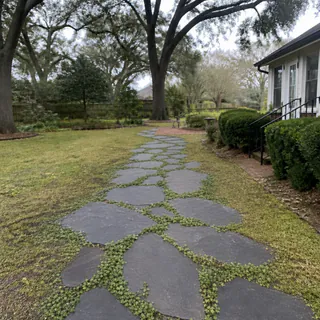
The driveway, patio, pool surround and commercial paving finishes we lay across Cape Town. These are illustrative renders to help you picture the finish — not photographs of jobs we have completed.
Charcoal cobble driveway
Flagstone pathway
Granite cobble entrance
Natural sandstone patio
Travertine pool surround
Exposed aggregate driveway
Bond paving walkway
Slate stepping stones
Tumbled cobble entrance
Clay brick pool deck
Charcoal cobble driveway
Flagstone pathway
Granite cobble entrance
Natural sandstone patio
Travertine pool surround
Exposed aggregate driveway
Bond paving walkway
Slate stepping stones
Tumbled cobble entrance
Clay brick pool deck
Get A Real Price For Your Paving
Free on-site measure-up, no call-out fee. We price the real area and the real build-up, and you get it in writing with the excavation, the base and the paver each on its own line.