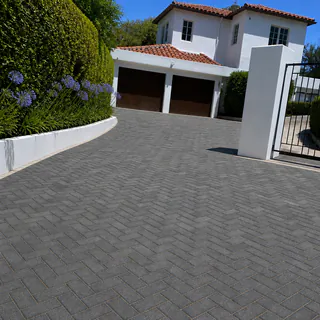
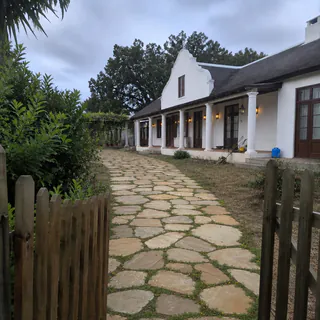
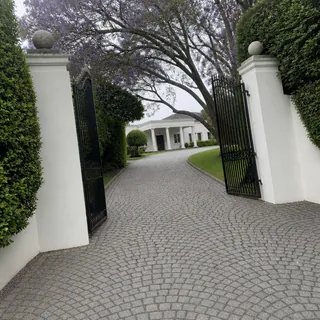
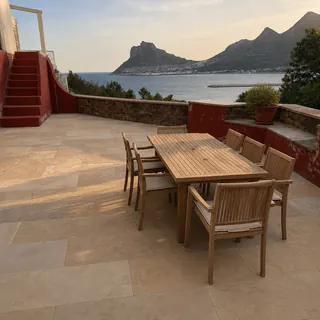
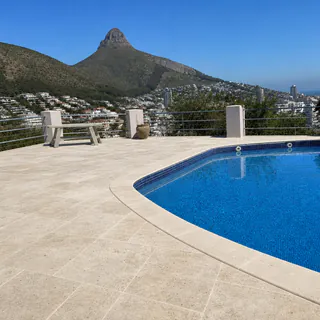
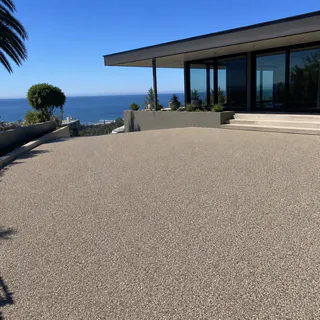
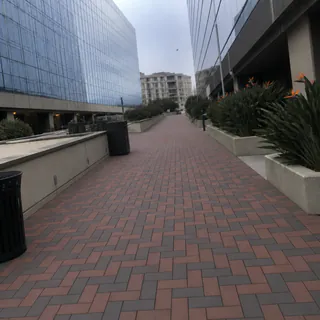
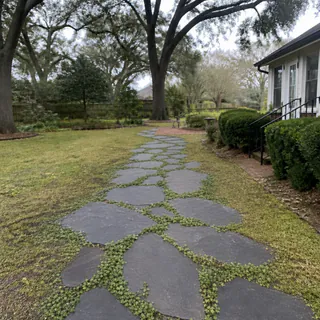
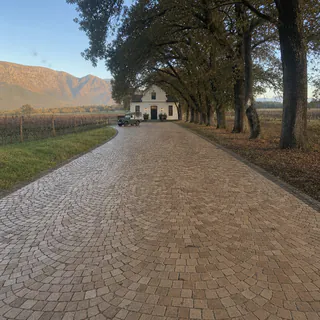
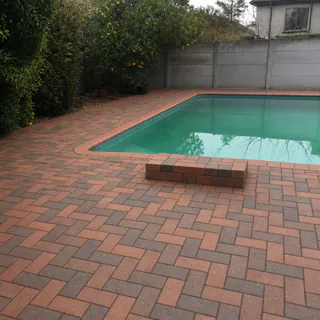
A garden path has to look right, feel solid underfoot and stay where it was laid. We lay garden pathways in Constantia, Newlands, Stellenbosch and across the wider Cape Town area, in whichever of the stones below suits the garden.
We walk the garden with you, mark out the path line and talk through the stone, then put a written quote together from what we measure. Free, with no obligation.
The short version
- Stepping stones or a path. Stepping stones sit in their own pockets; a continuous path needs a trench, base and edges.
- Edges hold it together. For concrete block paving, the Concrete Manufacturers Association (CMA) says a pedestrian walkway may only need a small precast concrete kerb or a premix infill as its edge restraint.
- The base follows the traffic. For block paving, the CMA says an imported subbase may be needed where the ground is weak or traffic is heavy, and in many cases can be left out.
- No rate card. You get a written price after we have measured the path line.
When To Relay A Garden Path
Rocking stones, a green film, patchy repairs or a path in the wrong place. At the measure-up we check what sits under it before recommending anything.
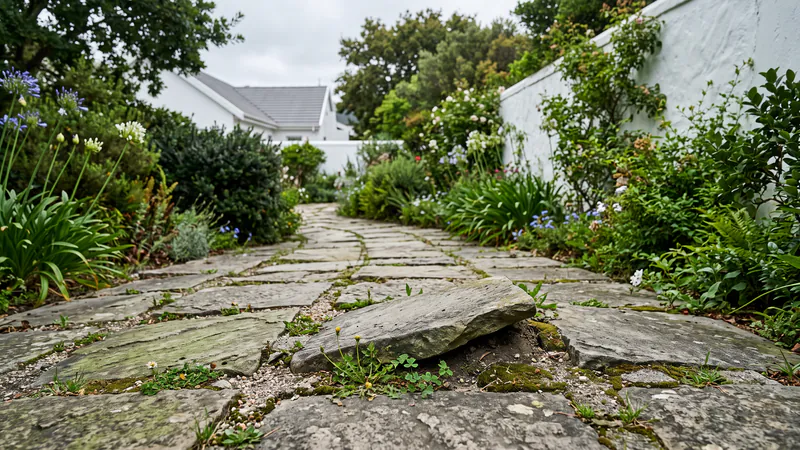
Stones tilt or rock underfoot
A stone that moves has lost its support, for example from a thin base, washed-out bedding or a root. Where the rest of the path is sound, the fix can be a repair confined to the part that moved, with what is under it rebuilt first.
Slippery green algae film
A green film on a path is, in our view, a cleaning job first and does not on its own mean lifting the path; if you seal afterwards, follow that sealer's own instructions.
Mismatched patches from old repairs
Earlier repairs in the wrong stone break the path up. We rebuild the patched sections in one stone so the path can read as one piece again, and you choose the replacement stone before any work starts.
The path no longer fits the garden
Trees grow and beds spread. We can take up an old path and lay a new line where it makes sense now.
Stepping Stones Or A Continuous Path
Start with what has to travel along it. Stepping stones are for feet; in our view a wheelbarrow or a wheelie bin needs a continuous path.
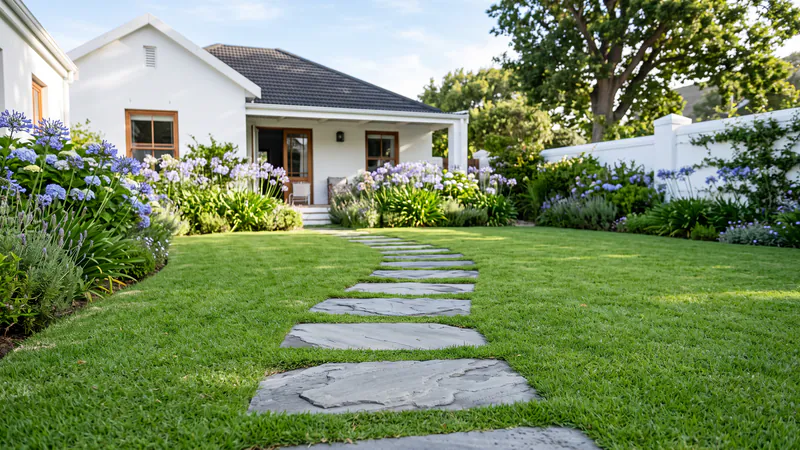
Stepping stones: good
- Each stone gets its own dug pocket, so the lawn and beds between them stay intact.
- Planted joints make the path part of the garden.
Stepping stones: watch out for
- Planted joints need weeding.
- Awkward for a wheelbarrow or a wheelie bin.
- Stones too small for one stride turn a path into islands.
A continuous path takes wheels, and needs a trench, a compacted base and edges. Our guide to stepping stones, planted joints and front-garden paths shows how both fit a frontage.
Pathway Materials
Joints And Edges
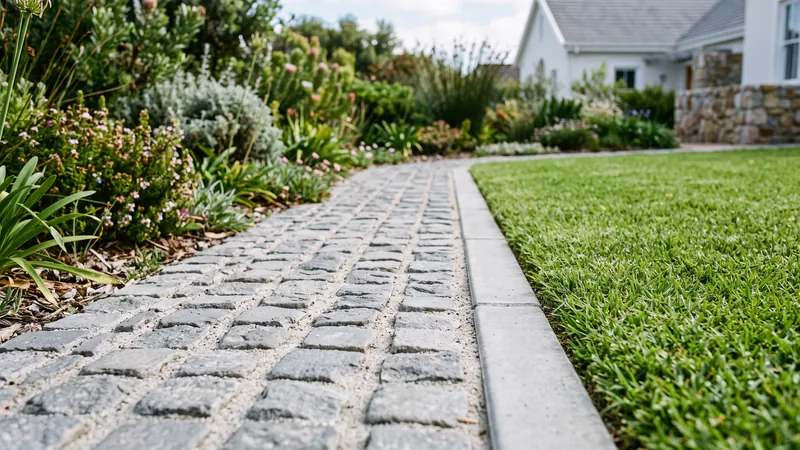
A continuous path on a sand bed needs an edge restraint so it cannot creep sideways. On block paving the joint sand does structural work; on stepping stones and flagstones, in our view, the joint fill is more a choice of look.
Edge restraint
CMA Book 2 says segmented (concrete block) paving needs adequate edge restraint, and that a pedestrian walkway may only need a small precast concrete kerb or a premix infill.
Steel, timber or brick
Other edging options we quote where a path meets lawn or beds.
Jointing sand
For block paving the CMA calls for a finer sand in the joints than in the bedding: coarse river sand to bed, a finer plaster sand to joint.
Gravel or planting
Stepping stones and flagstones can instead be jointed with fine gravel, polymeric sand or a planting joint: your choice.
The CMA says block paving joints should be topped up when required, typically three months after construction.
How We Build Your Path
Five stages, and the ones that decide whether the stones stay put happen before the first stone goes down.
Site visit & layout
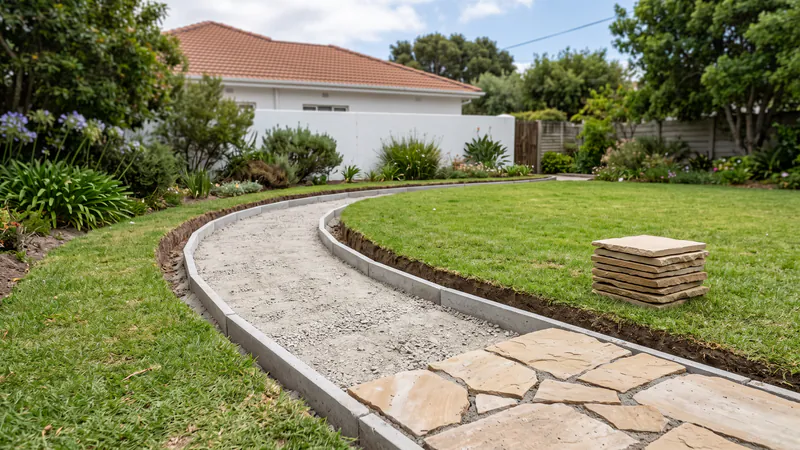
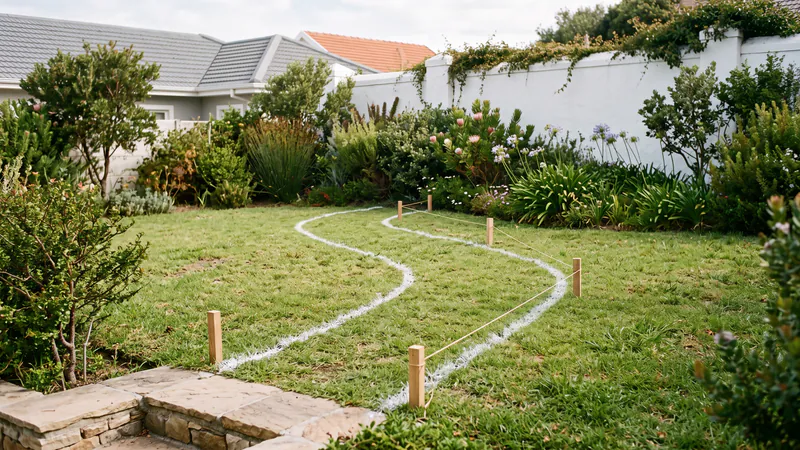
We walk the garden with you, mark the path line out and talk through the stone. No call-out fee, and the quote follows in writing.
Excavation
A continuous trench for cobble and flagstone paths, or a pocket for each stepping stone.
Base & edges
A compacted base goes in, and a continuous path gets an edge restraint along any side that a wall, step or existing slab does not already hold. How much base depends on the ground and what will use the path, which we judge on site.
Bedding & laying
For concrete block paving, the CMA's figure is bedding sand screeded loose to give 25mm after compaction, with a 10mm tolerance. Natural stone may be bedded in sand or mortar instead, and your quote states which. Flagstones are placed and tapped level; block paving is plate-compacted.
Jointing & clean-up
The joints are filled with the sand, gravel or planting mix you chose, the site is cleaned, and we walk the finished path with you.
What A Garden Path Costs
We don't publish a per-square-metre rate. Four things move the price, and your written quote puts each one on its own line.
The stone
Tumbled cobble and clay brick sit at the affordable end, slate and Cape Dutch flagstone in the middle, and wide-format porcelain at the top.
Path or stepping stones
A continuous path is built up along its whole length; stepping stones only where each stone sits.
What comes up first
An old path, concrete or planting on the line has to be lifted and carted away before anything new goes down.
Size
Very small paths can carry a minimum charge, because a crew and a plate compactor still have to arrive. If yours does, it is on the quote.
Planning a patio too? We can quote a patio laid to match as one job. Our cost guide covers what else goes into a paving price.