The full range of paving work we take on — driveways, patios, pool surrounds, garden pathways, commercial paving and repairs. We measure up at your place, build on a proper base, and put the excavation, the bedding depth and the paver in writing on your quote.
We measure up on site, then quoteNo call-out fee, no obligationA written, itemised price — however big the job
The paver on top is the easy bit. What decides whether a surface lasts is underneath it — the compacted G5 sub-base, the edge restraints and the falls that move water off the surface rather than into it. That is where the time goes on our jobs, and it is written into every quote we give for the services below.
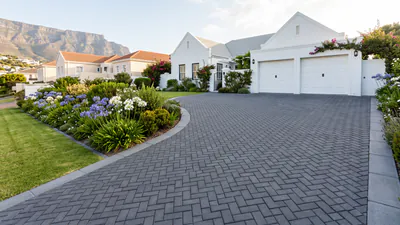
Charcoal cobbles, clay brick, exposed aggregate and granite — driveways built on a base designed for your ground and everyday vehicle loads.
See details
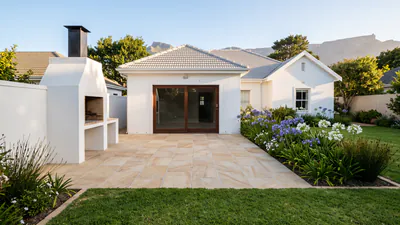
Sandstone, travertine, porcelain and brick patios — entertaining surfaces built for braai nights and everyday use.
See details
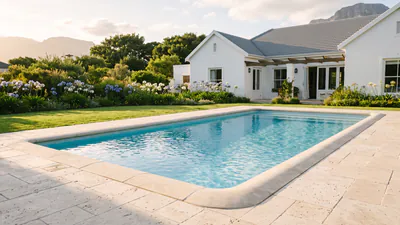
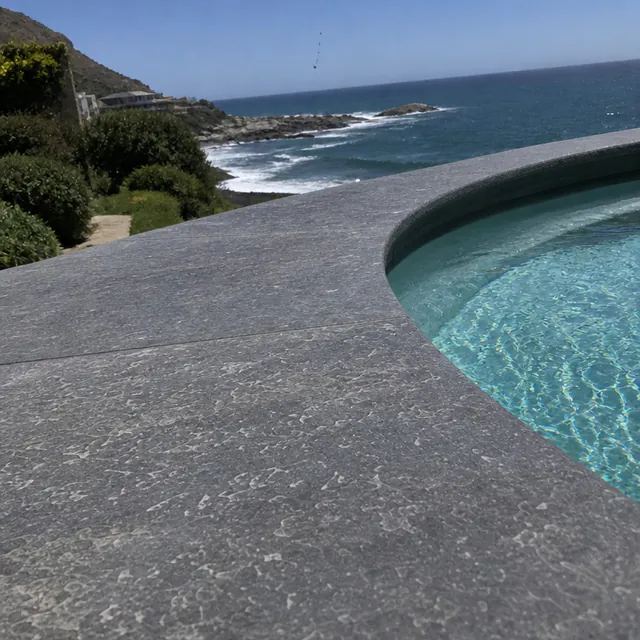
Travertine, slate, porcelain and bullnose coping, laid with textured finishes and falls away from the water, for pool decks across Cape Town.
See details
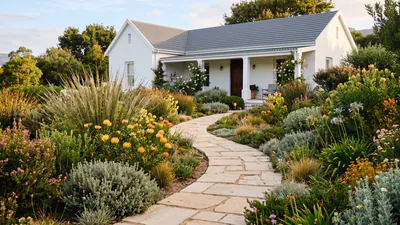
Flagstone, stepping stones and cobble paths that wind through fynbos gardens or across formal lawns.
See details
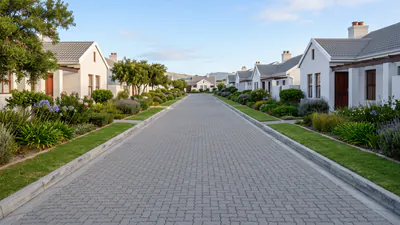
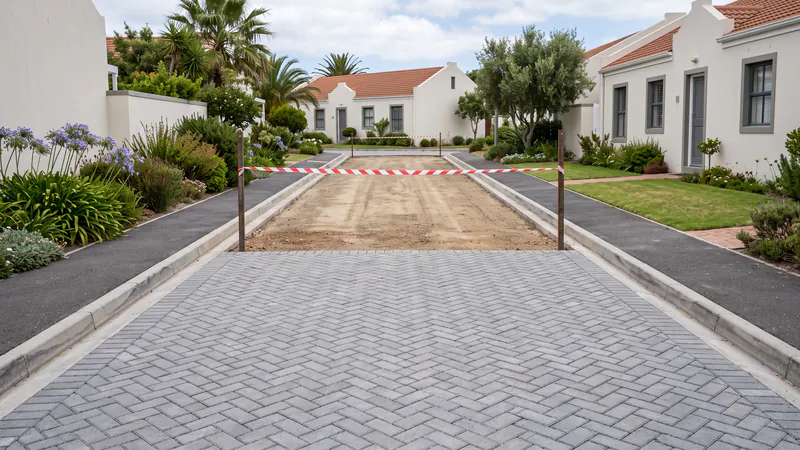
Industrial 80mm pavers, granite slabs and bonded brick walkways — built for warehouses, office parks, retail and parking lots.
See details
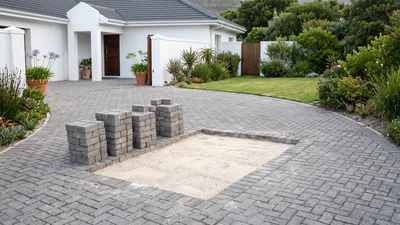
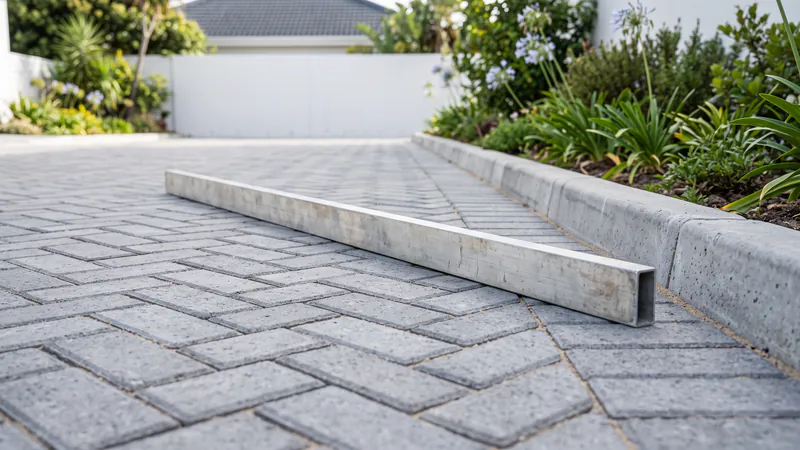
Sunken sections, broken pavers, empty joints — where the failure is local, we fix just the affected area without redoing the whole driveway.
See detailsMost people arrive knowing what they want the finished thing to look like, not which of the six above it is. Which one you need is settled by what is on the ground now.
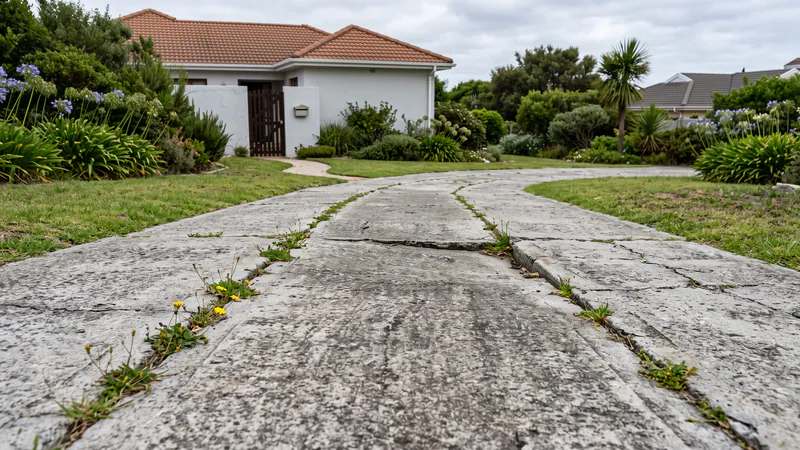
A cracked slab has moved, and anything laid over it inherits the movement. The part people miss is height: blocks and bedding sit proud of the old surface, and the garage door, the gate swing and the front step are the first casualties. So a slab usually means breaking out rather than overlaying.
A dip in the wheel tracks while the rest of the field is true is worth repairing rather than replacing — provided the cause is found first. If the whole area rolls instead, the base is the problem and relaying the top only resets the symptom. Our guide to why paving sinks and what a lift-and-relay involves separates the two.
The simplest brief with the biggest hidden variable. Next to a new house the ground is backfill, and backfill has not carried anything yet. “Nothing to break out” is not the same statement as “shallow excavation”, so we open test holes before quoting.
Ponding is a levels problem, not a paver problem: a nicer surface laid to the same levels changes nothing. What has to move is the low edge, and what receives the water there.
A patio that is merely dated already sheds water at the right level, so it is a materials decision — the one case where the paver is the whole conversation.
All six share a sequence — dig out, build a base, compact it, bed, lay, restrain the edges, joint. What changes is what each layer is asked to do, and a build-up that is right on one is wrong on the next.
Excavation depth follows the load and the ground, not the name of the service. Under a driveway we dig until we reach something that will carry a car twice a day; under a garden path, until the surface will not move under a foot.
A driveway’s edge restraint is structural: block paving holds together by interlock, so the outside row has to be held or the field walks. A path has far less pushing outwards. On a pool deck the edge is the coping, bedded onto the pool beam and cured before any deck paver goes near it.
Every one of them falls. What is not interchangeable is the direction: a driveway sheds towards the street or a channel, a patio away from the house, a pool deck away from the water rather than back into it. A correct gradient running the wrong way does not show until it rains.
A driveway is judged on load. A pool deck is judged wet and barefoot, which rules out finishes that are perfectly good on the patio next to it. A yard taking delivery vehicles is judged on turning and braking loads.

Every quote should carry the same skeleton, whatever the job, and how we price a paving job sets out what each line on it is paying for. What changes with the job type is the question that comes after.

Ask what the base is being built to, and who confirms it was compacted before the bedding went on: it is the one layer nobody can inspect once the pavers are down, and the layers under your paving decide more than the paver on top. Then ask where the water leaves at the bottom of the slope.
Ask what the finished level will be against your door threshold and against the lawn, before you choose anything. A patio finishing proud of a doorway cannot be put right afterwards without lifting it, which is why our sign-off checks for new paving include a door threshold.
Ask for the coping detail and the curing sequence in writing, and for the slip-resistant finish to be named as a product rather than described as a quality. “Non-slip” is a reassurance, not a specification. Our travertine, slate and porcelain pool-deck comparison covers what to check on each.
Ask what caused the movement, in one sentence, before you ask what it costs — a relay quoted without a cause is the same fault covered back over. Ask too whether your paver is still made, because matching an older block often decides whether a section can be relaid.
At a house the site visit is one conversation with the person who decides. At a complex or a retail forecourt it rarely is.

Sequencing is the other difference. Parking bays, delivery aprons and school courtyards cannot all close at once, and after-hours or weekend work is something we can programme where a site cannot stop trading. Raise it at the site visit rather than afterwards. The phone is answered Monday to Friday, 8am to 5pm.
We pave across the Cape Peninsula — Atlantic Seaboard, Southern Suburbs, Northern Suburbs, City Bowl, False Bay and the Helderberg.